05 October 2026
Juice Summit 2026: Certified Fruit Concentrates for Industrial Buyers
Why Juice Summit 2026 Is the Critical Window for Q1 2027 Supplier Frameworks
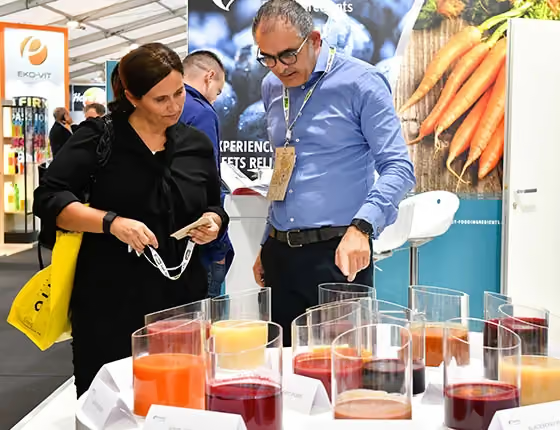
Juice Summit 2026 — the joint annual event of AIJN and SGF, opening 14 October — is not a general trade fair. It assembles the people who decide which suppliers enter approved vendor lists and which are deferred to the following cycle. For procurement leads and R&D buyers in the juice and fruit ingredient sector, the window between Juice Summit and year-end budget freeze is the only realistic runway to qualify a new supplier, validate specifications, and execute a framework agreement before Q1 2027 planning closes.
That window is narrow. Vendor qualification under FSSC 22000 / GFSI-aligned procurement policies typically requires certificate verification, CoA review, and at minimum one inter-lot consistency check before a supplier is moved to approved status. Buyers who do not open supplier conversations around Juice Summit 2026 will, in most cases, carry their current supplier roster unchanged into the new year — absorbing whatever spot-market volatility that entails.
This article sets out precisely what Hubcycle brings to that conversation: certification credentials, documented quality consistency, and a sourcing model that delivers structural cost optimisation without introducing compliance risk.
FSSC 22000 / GFSI Certification: The Non-Negotiable Standard for Fruit Concentrate Procurement
The first question any procurement function asks when evaluating a new ingredient supplier is categorical: does this supplier hold the certifications required to enter our approved vendor list without triggering a full qualification audit from scratch? For the juice and fruit ingredient industry — where retailer codes of practice, customer audit requirements, and internal QA standards converge — FSSC 22000 / GFSI certification is the baseline, not a differentiator.
Hubcycle operates under FSSC 22000 / GFSI certification across its ingredient supply operations. This means the certificate is presentable at the point of first commercial contact, not at the end of a multi-month qualification process. For buyers managing Q1 2027 framework timelines, this is material: it compresses the vendor onboarding path significantly. The certification scope covers the full handling and supply chain steps relevant to certified fruit concentrates, and documentation is available for immediate review upon request through the Hubcycle commercial team — before, during or after Juice Summit week.
GFSI-recognised certification also satisfies the audit equivalence requirements of the principal European retailer and food manufacturer codes, removing the need for parallel qualification exercises and the associated delays.
Hubcycle's Supply Model: Consistent Quality Across Every Lot
Hubcycle's sourcing model is built on verified secondary streams from agro-industrial processing — high-value material flows generated at extraction, pressing, concentration, and sorting stages within established food manufacturing operations. These are not speculative or opportunistic sources. They are contracted, characterised, and integrated into Hubcycle's supply chain with the same rigour applied to any primary agricultural input.
The practical implication for industrial buyers is that supply reliability and quality consistency are not compromised by the sourcing model — they are built into it. Because Hubcycle sources from fixed industrial processes with predictable output characteristics, lot-to-lot variability is managed structurally, not reactively.
Lot-to-Lot Traceability and CoA Documentation
Every lot supplied by Hubcycle is accompanied by a Certificate of Analysis issued as a matter of course — not on request, not selectively. CoA documentation covers the parameters relevant to fruit concentrate procurement: Brix, pH, colour (ICUMSA or CIE L*a*b* as applicable), microbiological counts, and heavy metal profiles where specified. Traceability is maintained lot-to-lot, meaning the supply chain record for any given delivery can be reconstructed to source batch and processing date.
For buyers whose own compliance audits require upstream traceability data — increasingly standard under FSSC 22000, BRCGS, and customer-mandated audit frameworks — this documentation is available systematically, not assembled retrospectively. Hubcycle's traceability infrastructure is a data asset, not a retrospective paper exercise. It is this layer of documented chain-of-custody that makes the verified secondary stream model audit-proof at the buyer's end.
Phytochemical Specifications and Industrial Format Compatibility
Certified fruit concentrates supplied by Hubcycle are characterised at the phytochemical level where formulation relevance requires it: polyphenol profiles, antioxidant indices, and specific marker compound concentrations are documented for botanically active references. For R&D buyers integrating concentrates into functional beverage or food applications, this level of specification is a direct formulation input, not a marketing claim.
Industrial format compatibility covers standard bulk concentrate formats — aseptic bag-in-drum, IBC, and bulk tanker configurations — matching the inbound logistics and processing requirements of juice manufacturers and ingredient blenders operating at scale. Hubcycle does not supply retail-format product; the entire commercial offering is configured for industrial procurement.
Fruit Concentrate Categories Available: From Juices & Concentrates to Functional Botanicals
Hubcycle's catalogue relevant to the juice and fruit ingredient sector spans two primary product clusters: Juices & Concentrates and Functional Botanicals, with additional references in Fruits & Vegetables and Spices & Herbs where these intersect with beverage and functional food formulation.
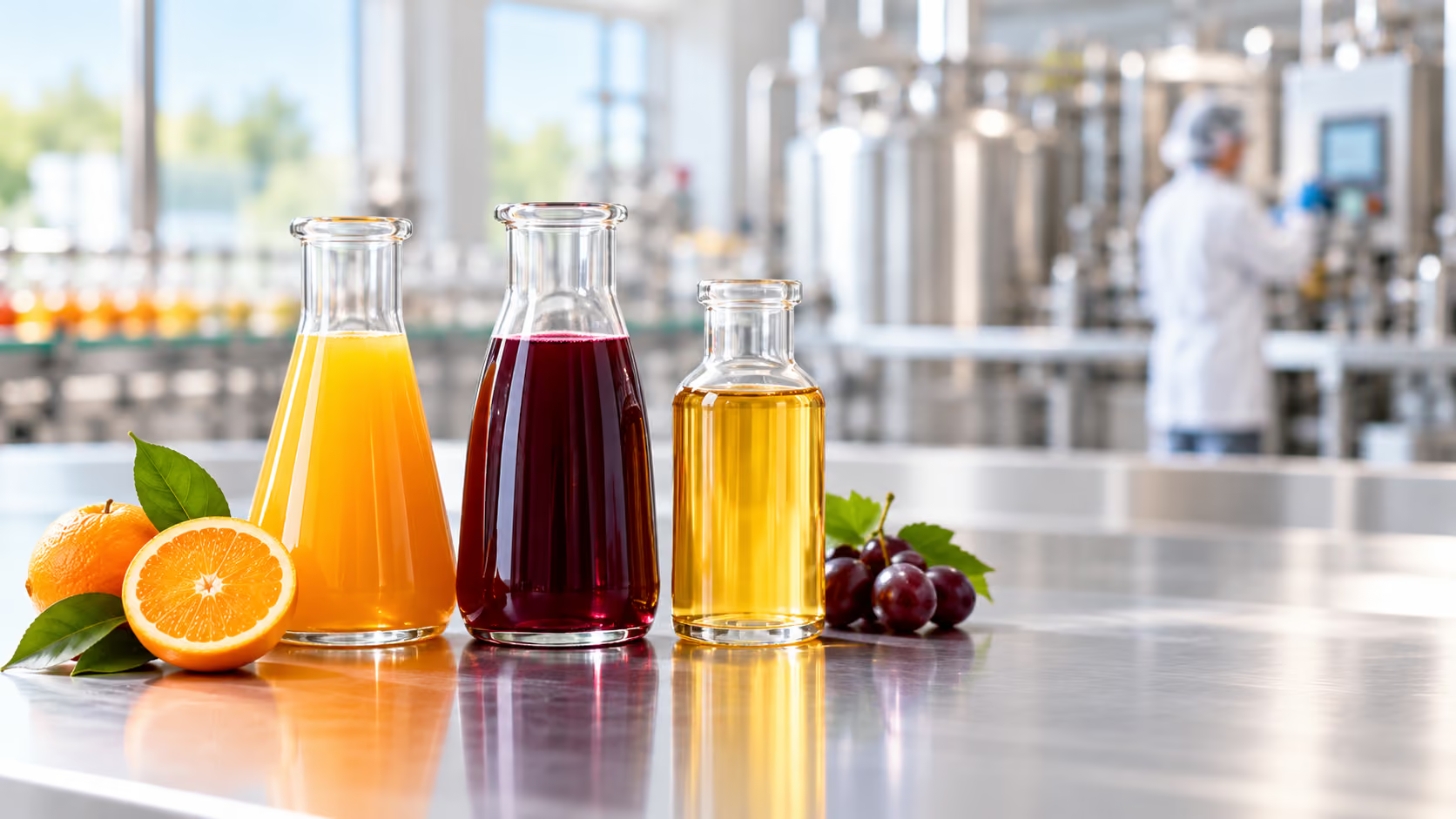
Within Juices & Concentrates, available references include single-fruit concentrates and multi-fruit blends in standard industrial Brix ranges, supplied with full CoA documentation and lot-to-lot traceability. Specific references, Brix specifications, and available volumes are discussed in commercial dialogue — catalogue detail is presented in the context of the buyer's formulation pipeline rather than as a static list.
The Functional Botanicals category is relevant to R&D buyers developing high-specification beverages or nutraceutical-adjacent food products. References in this category carry documented phytochemical profiles and are supplied in formats compatible with both liquid ingredient handling and spray-dried intermediate applications.
Buyers with active formulation projects in either category are encouraged to share the brief with Hubcycle around Juice Summit 2026. Hubcycle's commercial team will map available references against the specification requirements before a first call, making the sourcing conversation immediately productive rather than exploratory.
Structural Cost Optimisation Without Compromising Compliance
Hubcycle's sourcing model from verified secondary agro-industrial streams generates a structural cost position of 20–30% below prevailing spot market prices for equivalent certified fruit concentrate specifications. This is not a promotional pricing position — it reflects the upstream economics of sourcing from high-value material flows that sit outside the primary agricultural commodity market.
The compliance position is unchanged. The certifications are identical. The CoA documentation is identical. The lot-to-lot traceability is identical. The cost differential is a function of sourcing architecture, not of a reduction in quality, documentation, or audit readiness.
For procurement functions managing ingredient cost under margin pressure — and specifically for those who must present supplier framework decisions to finance and operations before year-end — this represents what is more precisely described as optimisation of structural cost of goods, rather than a tactical discount. The 20–30% differential is available on a sustainable, framework-contract basis, not as a spot-buy exception.
The environmental dimension of this sourcing model is quantified at 6.4 tonnes of CO₂ avoided per tonne of ingredient supplied, relative to primary production equivalents. For buyers operating under CSRD reporting obligations or supplying customers with Scope 3 reduction commitments, this figure is documentable and attributable at the lot level — a carbon saving that functions as a verifiable supply chain asset, not a generic sustainability statement.
Opening a Sourcing Conversation with Hubcycle Around Juice Summit
Juice Summit 2026 opens 14 October. The realistic deadline for completing supplier qualification and executing a Q1 2027 framework agreement sits in mid-to-late November for most procurement calendars. That leaves approximately six weeks from the event to conclusion — sufficient, but only if the qualification process begins with documentation already available.
Hubcycle is not exhibiting at Juice Summit 2026, but the qualification conversation does not need a booth. Hubcycle's FSSC 22000 / GFSI certificate, standard CoA templates, and product data sheets for relevant concentrate references are available immediately upon request — before, during or directly after the event, by email or on a call. There is no minimum order qualification threshold for initiating a commercial discussion.
The most productive entry point is a brief from the buyer's side: target Brix range, fruit species or blend requirement, annual volume indication, and any specific phytochemical or microbiological parameters driven by the formulation or customer audit context. With that information, Hubcycle can confirm reference availability, present matching CoA data, and propose a framework structure within the Q1 2027 planning window.
To schedule a call during Juice Summit week or to request product documentation, contact the Hubcycle commercial team directly. The conversation starts with certification. The sourcing decision follows from there.