13 October 2026
GLP-1 Reformulation Wave: Why Certified Functional Ingredients Are Now Non-Negotiable
The Signal: GLP-1 Has Moved from Pharmacy Shelf to Grocery Basket
GLP-1 medicines are no longer a niche treatment. A KFF poll published in November 2025 found that 12% of US adults were currently taking a GLP-1 drug, and 18% had taken one at some point. Gallup's 2026 tracking puts current use for weight loss at 11% of US adults, up from 3% in 2024. In the UK, UCL researchers estimate that 1.6 million adults used weight-loss drugs in the past year, with a further 3.3 million intending to.
Access is widening fast. Oral formulations have changed the economics of adoption: the Wegovy pill was approved by the FDA in December 2025 and launched in the US in January 2026, before receiving European Commission approval in July 2026. Lilly's orforglipron followed with FDA approval in April 2026. Morgan Stanley now projects around 55 million US users by 2035.
For the food industry, the relevant number is not the share of patients but the share of baskets. Circana estimates that 23% of US households already include a GLP-1 user, and projects that these households will account for 35% of all US food and beverage units by 2030.
What Changes in the Basket
The purchasing data is now robust enough to plan against. A Cornell study published in the Journal of Marketing Research, released in January 2026, found that households with a GLP-1 user reduced grocery spending by 5.3% on average within six months — and by more than 8% in higher-income households. Savory snacks fell by around 10%, with sweets, baked goods and cookies also declining. Yogurt recorded the largest increase, followed by fresh fruit, nutrition bars and meat snacks.
Numerator's GLP-1 panel of around 30,000 consumers points the same way: spending on protein shakes rose 38%, and on bone health and digestive health products by 23% and 6% respectively. Morgan Stanley's 2026 survey found that 68% of users eat fewer meals and 44% eat smaller portions.
The pattern is consistent: fewer calories, smaller portions, and a clear shift towards foods that deliver more nutrition per bite.
The Reformulation Response: Protein, Fibre and Nutrient Density
The nutritional logic behind that shift is now formalised. A joint advisory published in May 2025 by the American College of Lifestyle Medicine, the American Society for Nutrition, the Obesity Medicine Association and The Obesity Society set out nutrition priorities for people on GLP-1 therapies: nutrient-dense, minimally processed diets; adequate protein, combined with strength training, to preserve lean mass; prevention of micronutrient deficiencies; and management of gastrointestinal side effects.
Brands have responded across categories:
- Frozen meals: Nestlé's Vital Pursuit range combines high protein, a source of fibre and portions sized for reduced appetite. Conagra added a GLP-1-oriented badge to 26 Healthy Choice meals that are high in protein and rich in fibre.
- Dairy and drinks: Danone's Oikos Fusion delivers 23 g of protein and 5 g of prebiotic fibre per serving, positioned on muscle maintenance.
- Foodservice: Smoothie King launched a GLP-1 support menu built around protein, fibre and no added sugar.
- Bakery and staples: carb-balanced tortillas, high-fibre breads and protein-enriched snacks are being repositioned for the same consumer.
Fibre is the quieter half of the story. Innova data reported by FoodNavigator shows "high in fibre" claims growing at a 5.4% compound annual rate between 2020 and 2025, and at around 15% in fruit and vegetable products, with 39% of Europeans very or extremely interested in fibre. Mintel's 2026 outlook describes the next phase as a move from simply more fibre to greater fibre diversity.
Polyphenols are an emerging third axis. Early clinical work has linked polyphenol-rich meals to changes in post-meal GLP-1 secretion, but the evidence base remains preliminary — which makes documented, consistent polyphenol profiles more valuable to R&D teams, not less.
The B2B Opportunity: Ingredients That Deliver Density Per Gram
Smaller portions change the formulation brief. When a consumer eats less, every gram has to carry more protein, more fibre and more micronutrients, without adding sugar or calories. Protein enrichment is largely being met by dairy and dedicated protein ingredients; the fibre and phytochemical side of the brief creates direct B2B demand for two ingredient families in particular:
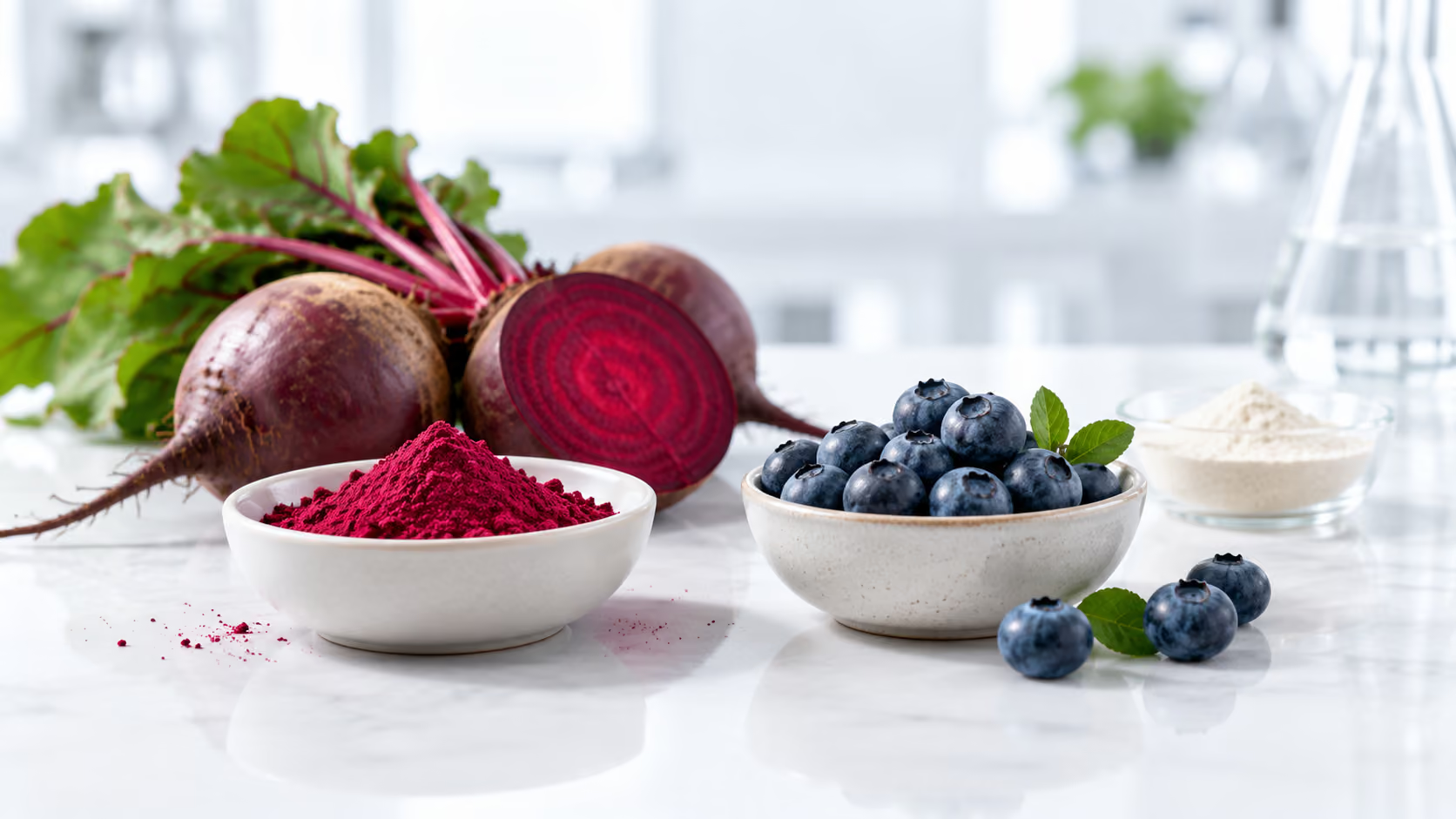
- Fruit and vegetable powders and fibres — to raise fibre content, support "source of fibre" or "high in fibre" claims and deliver fibre diversity in bakery, snacks, dairy and beverages.
- Functional botanicals with documented polyphenol profiles — for beverages, bars and supplements targeting metabolic health and satiety positioning, within the limits of authorised claims.
Hubcycle's portfolio addresses both from certified secondary streams of established food processing: fruit and vegetable powders, functional botanicals and juices and concentrates. The advantage for formulators is twofold — nutrient-dense ingredients with a structurally competitive cost position, at a moment when reformulation budgets are under pressure from shrinking basket sizes.
Why Certified Traceability Is Now Non-Negotiable
In the GLP-1 segment, the ingredient is the claim. A product sold on "high protein" or "source of fibre" must hit the threshold on every batch, not on average. Under EU rules, a "source of fibre" claim requires at least 3 g per 100 g, "high fibre" at least 6 g, and "high protein" at least 20% of energy from protein. If a fibre-rich powder varies from lot to lot, the finished product's claim is exposed.
The regulatory margin is also narrow. As FoodNavigator has reported, a "GLP-1 friendly" message on pack would be treated as a health claim in the EU, and no such claim is authorised. Brands therefore lean on nutrition claims — protein and fibre content — that must be substantiated with data. That substantiation starts at the supplier.
This is why industrial buyers in this segment increasingly treat three supplier capabilities as entry criteria rather than differentiators:
- FSSC 22000 / GFSI certification, so the ingredient can enter approved supplier lists without a bespoke audit.
- A per-lot Certificate of Analysis with measured values for the nutritional parameters the claim depends on — fibre, protein, polyphenol markers — alongside contaminants such as heavy metals, which concentrate in dried powders.
- Lot-to-lot traceability, so that any deviation in a finished product can be traced back to a specific ingredient lot within hours.
Health-positioned products carry higher reputational risk than standard ranges. Buyers know that a claim failure on a GLP-1-oriented product is a brand problem, not just a compliance one — and they are qualifying suppliers accordingly.
What to Watch Next
- Oral GLP-1 launches in Europe from the second half of 2026, which are likely to accelerate adoption outside the US.
- Claim strategy in the EU, where brands will compete on substantiated protein and fibre content rather than GLP-1 language.
- The shift from fibre quantity to fibre diversity, which favours suppliers with a broad portfolio of fruit, vegetable and botanical fibres.
- Post-medication diets: research suggests some purchasing changes fade when users stop treatment, while others — such as higher produce consumption — persist. Formulations that serve both groups will travel furthest.
For R&D and procurement teams building a GLP-1-ready pipeline, Hubcycle can provide specification sheets, sample CoAs and samples across fruit and vegetable powders and functional botanicals.